Native Hollywood
Dear Dr. Per Cap:
I think it would be exciting to act in Native movies and TV shows. How do you land roles and is the money good?
Signed,
High Cheek Bones
Dear High Cheek Bones:
Who among us doesn’t dream of a chance for their proud indigenous countenance to shine on screen in an iconic role that brings fame and fortune across Indian Country and beyond? The next Irene Bedard, Graham Greene, Lily Gladstone, or Jeremiah Bitsui could be you!

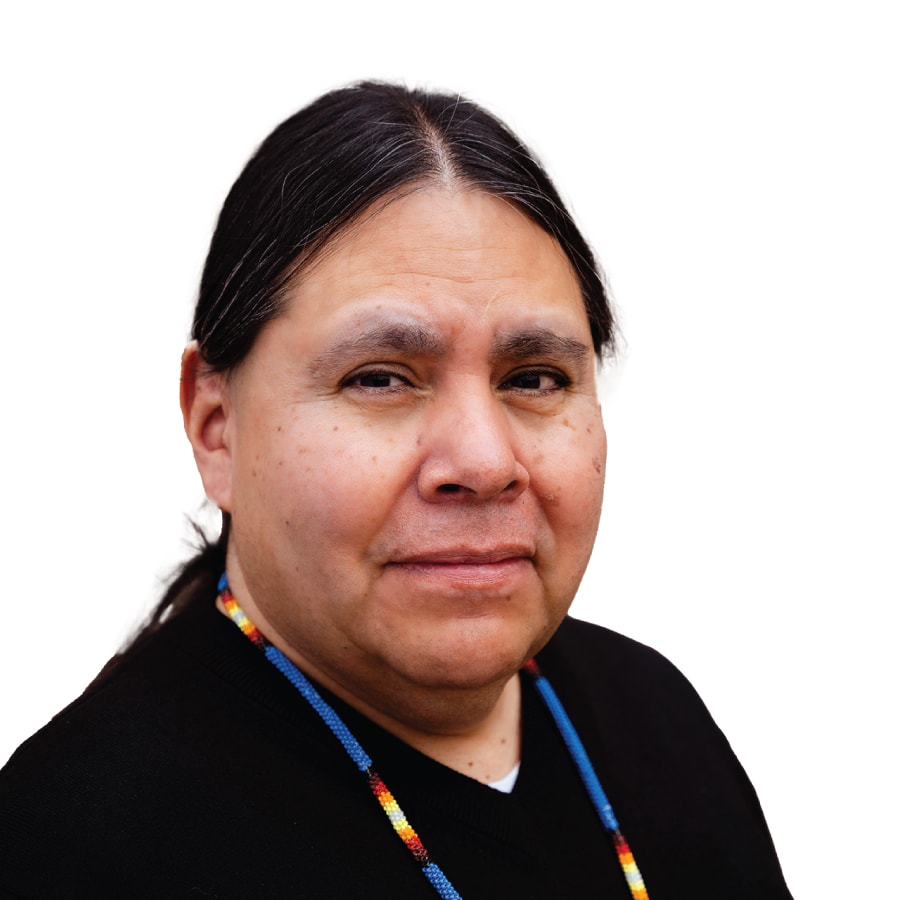
But before you pack up for Hollywood, let me share what I learned recently from a good Laguna Pueblo friend and colleague named Leroy “Buster” Silva (pictured left). Leroy has been acting steadily for over ten years with credits in hit shows like Longmire, Lawmen: Bass Reeves, and Kevin Costner’s Horizon: An American Saga.
He happily shared his knowledge and explained how he began his acting journey by doing background on productions filmed in and around his home state of New Mexico. Basically, playing an extra in scenes where he had no speaking role. He said uncredited extra work isn’t glamorous and pays anywhere from $100 to $280 for an eight-to-ten-hour day on set, but it’s a chance to get your foot in the door to experience the movie business first-hand and begin building a resume’.
Background work eventually landed Leroy a few speaking roles as a day player which is a major milestone for an aspiring actor. Day players, even if they deliver only one line, enjoy a huge jump in pay from extras. Currently a day player earns $1,246 a day or $4,326 a week, depending on how long one is on set. Good money for sure, but not enough to quit your day job because actors can go weeks or even months in between jobs.
Day players are also more likely than extras to be listed in credits, perhaps with titles such as Warrior #3, Young Comanche Girl, or Native Elder. Yeah, sounds a little stereotypical but that can be part of show biz too.
Then there are support actors like Leroy. Support actors aren’t leads but they usually have more lines and scenes than day players and are compensated accordingly. In fact, Leroy’s biggest payday was a solid five-figure check for one week on the Bass Reeves set playing a tribal chief. But Leroy made it clear he only acts part-time to supplement his main career serving his community as a successful educator and non-profit executive. He chooses roles when he appreciates the challenge along with an opportunity to earn extra income for his family.
Next you have working actors. These are the folks we’re probably all familiar with in Indian Country. Lead actors like Tatanka Means, Jana Schmieding, and Zahn McClarnon. At this level the pay can be very lucrative; however, these are full time actors who make a lot of sacrifices for their careers. They can be away from home for months at a time and very dependent on the capricious nature of an industry where just one role can make or break a career.
These are reasons why Leroy stressed for anyone looking to break into show business to determine what type of actor they want to be. Some people want to hit it big while others are happy as background actors with just a small role here and there.
Other questions to consider include joining the Screen Actors Guild (SAG) and hiring an agent. SAG membership has benefits but an actor needs speaking roles in at least three SAG productions to be eligible. It also requires an initial fee of $3,000 and annual dues of $241. SAG also has restrictions. For example, SAG members can’t do non-union productions like local commercials or the billboard ads you see along highways.
An agent can help land roles and assist with problems like an issue on set or a delay with getting paid. An agent’s fee is typically 10 to 20% of what an actor actually earns and Leroy warned to avoid any agent requiring an advance payment or fee. They only get paid if you do.
Leroy also recommended boosting your resume’with skills such as weapons training and riding horses. Acting classes can help too; however, be mindful that they can be pricey and cut into an actor’s bottom line. When feasible, living near an area where a lot of shows and movies are filmed, like southern California, New Mexico, and Georgia is an added bonus.
I hope this all helps you realize your dream. In addition to your personal success, I want to note how important it is to have Native representation in Hollywood. We’ve come a long way from the wig wearing, teary-eyed white guy on the trash heap and those terse stoic Native warriors who always lost the battle to John Wayne.
Let’s take a moment to give props to people like Will Sampson, Chief Dan George, Dawn and Eddie Little Sky, and other trailblazing Native actors who helped build the Native entertainment industry we have today.
See you on the big screen!
Funded by First Nations with support from the FINRA Investor Education Foundation, it's important to note that the content provided does not constitute professional or financial advice, and Dr. Per Cap is not a licensed investment advisor. Questions can be directed to Dr. Per Cap at [email protected].
"I sincerely hope my work inspires others as we continue to foster economic empowerment through education, innovation and self-reliance for both present and future generations.”
Shawn Spruce, Champion of Financial and Investor Education in Native Communities, Host of Native America Calling